Protein/Carbs Before Exercise To Burn Fat?
by Dr. John Berardi
While nearly everyone nowadays knows that pre, during, and post exercise nutritional intake is critical for improving protein status and glycogen synthesis, most people fear that the ingestion of protein and carbohydrates during these times will decrease fat oxidation (burning).
Well, put simply, they're wrong (sticking out tongue).
Studies have demonstrated that even in the presence of a relatively high carbohydrate intake (and large insulin response), the addition of protein to a carbohydrate meal can increase fat burning during exercise.
So it looks like a well-designed pre, during, and post exercise intake will not only improve protein status and glycogen resynthesis but it may actually increase fat burning. Bigger and leaner? Say it ain't so.
Showing posts with label post workout. Show all posts
Showing posts with label post workout. Show all posts
Saturday, April 18, 2009


Friday, April 17, 2009
A Great Question About My Article
Ok I read yout Are We Eating too Much or Not Enough article and you really seem to know what your talking about, that is why I have a question for you and I hope you can help.
My names Caitlin Im almost 18 and I have come along way with weight loss. I have currently lost 69 pounds. I hope one day to become a Nutritionist and a Personal Trainer. I have spent so much of my time researching and learning about the body and the way it works. Including different things about metabolism and leptin levels, you name it :)
My family looks up to me and sees me as an insperation for all that Ive done for myself, being almost 18 and losing 69 pounds. I have actually helped many of them and friends of the family get on the right tracks. Theres one problem. Im sucessful with helping them but I cant seem to help myself and I have hit a rut.
As I have said Im almost 18, 5'4 and 130 pounds. I am so close to where I want to be my goal weight being 120 pounds.
I am currently doing the P90x, I dont know if you have heard of that program but it is pretty intense. I have already noticed a great deal of muscle definition and I have lost some weight while doing this program.
The problem is I have been around 130 pounds for 2 months now. I know its going to be harder because Im so close to my goal weight but I feel like Im working so hard and not moving any where.
I think I may know the problem but I am looking for a second opinion and like I said you seem to know what your talking about.
I am currently taking around 1500 calories a day. The videos for the P90x say that every workout you burn about 600 calories. My heart rate moniter says for only two of the exercises im burning about 600 and for the rest its closer to 300. Like I said these workouts are intense, plyometrics, core synergistics, chest back and biceps, legs and back, ab ripper x, and many more.
I also find I i get bored I may even do more like go out for a jog!
I believe the problem is that Im not taking in enough calories and its slowing my progress. I wanted to know by the information I have given, age, height, weight, calories burned for most exercises, and calories I am eating a day, if you have any solutions.
Also, my nutrition is pretty well. I do give myself a cheat day which is sundays but I find that those actually help me lose weight! Probably because the increase of leptin levels. I eat alot of good foods and try to go for whole wheat breads to get my fiber also know as "the good carbs." I eat fat free yogurt, alot of fruits, im not a big fan of veggies but I try to get them in, I eat nutri grain waffles for breakfast with sugar free syrup and a banana or on other days I may have oatmeal with a banana and for dinner I eat veggie patties, or try to find things low in fat but high in protein! I love subway turkey grinders! No cheese or dressings but tons of lettuce, pickles, and banana peppers. I also take a protein shake every day from body fortress, 26 grams of protein right there. I also find it helps me recover after work outs and gives me energy.
What could the problem be? Is it like I said, I need more calories?
I would really apreciate the help and your time!
Caitlin
First thanks for the email. I’ll answer it the best I can. Simple answer yes you need to add more calories to you daily intake. I’ve personally seen clients who have been eating 1200 calories for over 5 years! I can’t imagine that! I mentioned this in my article but it may take a bit of time for you hormone levels and metabolism in general to catch back up to “normal levels”. So keep that in the front of your mind.
P90x I have mixed feelings about but with someone in your situation where mobility issues probably aren’t an issue you probably will be just fine with it. I’ve never personally seen a video but I find myself saying all the time “it depends”. What I mean by that is 90% of the people in the world shouldn’t be following a video for their training. Most people have mobility issues that need to fixed or keep mobility up to help alleive or help alleive pain that could arise down the road. But that’s kind a whole other issue!
As far as what you are burning off during the workout sure it’s nice to know but there’s something called EPOC. Simply is means its what you burn off after your workout. This is why I think getting in the weight room is important in it’s efforts to create a bigger muscle breakdown and in turn create a higher EPOC and build more metabolically active muscle. So I would tell you to not worry so much about what your burning off during the workout and eating according to what you burnt off.
Here’s what I suggest to help you introduce more calories into your diet:
First , these were in my article as well but here is a starting point:
Eat every 2-3 hours, no matter what. You should eat between 5-8 meals per day.
Eat complete lean protein (described below) with EACH meal.
Eat fruits and/or vegetables with EACH meal.
Ensure that most of your carbohydrate intake comes from fruits and vegetables.
Ensure that 20-35% of your energy intake comes from fat, with your fat intake split equally between saturates (e.g. animal fat), monounsaturates (e.g., olive oil), and polyunsaturates (e.g. flax oil, salmon oil).
Drink only non-calorie containing beverages, the best choices being water and green tea.
Eat whole foods whenever possible (except workout per/peri/post-workout drinks).
Water: You shouldn’t wait until you are thirsty to start drinking. Take your bodyweight in pounds, divide by two and drink this in ounces.
Protein: The bulk of the protein that you consume should be from complete sources- sources that contain the entire amino acid chain. These include chicken breast, turkey breast, fish, lean pork, lean red meat, fresh ham, roast beef, eggs, milk, cottage cheese, and milk protein powders (whey and casein). One gram per pound of bodyweight is ideal for most.
Protein foods to avoid: fatty meats, fatty dairy foods, some lunch meat (ones high in sodium and fat), whole milk.
Carbohydrates: The bulk of carbohydrates in your diet should be from fibrous, unrefined sources. These include oatmeal, oat bran, lentils, beans, 100% whole-wheat bread, whole-wheat pasta, yams, greens, most other vegetables (salsa), and fruit. Simple sugars should be limited to special circumstances (pre/peri/post-workout)
Carbohydrate foods to avoid: sugar added foods, white breads and pastas, most cereals, soda, fruit bars, candy.
Fats: The bulk of fat in your diet should be primarily unsaturated and in the form of essential fatty acids (EFAs). These include flax seeds and/or flax seed oil, sunflower seeds and/or sunflower seed oil, fish oil, hemp oil, olive oil, raw nuts, all natural peanut butter, and avocados, cheese, red meat, and whole eggs.
Fat foods to avoid: margarine, vegetable oil, corn oil, heated or fried oils in general.
Pre, Peri, and Post Workout Nutrition: In short, the research shows that the body tolerates carbohydrate very well immediately after exercise. So it’s a good idea to consume your carbohydrates during the pre/peri/post-workout period. Reserve foods with high glycemic loads for pre/peri/post workout
These foods include sugary type foods, most cereals, potatoes, liquid calories, and flour products such as white breads and white pastas.
Maybe you follow these to a T but in most cases something needs to be changed. Weather it’s adding a little protein to every meal or starting to eat every 2-3 hours.
Next thing I suggest is after you implement these steps see if you are putting in more calories. I don’t think every situation needs to track what they are taking in calorie wise, but it may be helpful to make sure you are putting enough food down. If the intake isn’t high enough I suggest adding a bit more dietary fat which I’ll explain a bit later.
Give this new intake 2-3 weeks (maybe a bit longer 3-4 with your metabolism “catching up”) and see if things change both on the scale and take a look how your clothes fit. This is where it may be a bit of a guessing game on your end. You may need to add more calories if you didn’t see a difference or wait for your metabolism to return to normal staying at the same intake. If I have to guess with someone at your age you metabolism and such will catch back up pretty quickly but each situation is a bit different. I would even suggest a couple “refeeds” a couple times a week after a workout to help return your levels back to normal. And with this refeed a 50-100 extra grams of carbohydrates will do the trick.
Carbohyrate intake is something that may be taken a look at also. Most “whole wheat” products aren’t that at all. Here’s a great article worth reading:
Most people don’t handle carbs all that well so I suggest with someone trying to lose weight to only get their carbs from veggies and fruits other than right after wakening and after your workouts. Here’s another great article explaining why:
It’s a complex article but hopefully make a bit of sense!
Lastly I’ll finish my book with post workout nutrition. Check out my blog post for more info on this:
Supplements can help you meet your goals by being easy to drink on the go and taking advantage of “the window of opportunity” after a training session. There are other choices out there as far as supplements but the big difference is how the products are made. They can be denatured while processed and in the end leading to you absorbing less of the product. Compared to a quality supplement that wasn’t denatured under high temperatures while processed, leading to your body absorbing more of the product.
Wednesday, April 8, 2009
A Training Session
What should a training session look like? I'll first start with what I see a lot of individuals do:
1. Get on the treadmill or elliptical for a 5-10 minute warm up.
2. Static stretch for 5-10 minutes.
3. Head over to a machine and work on "strength training".
Here's what a training session should look like:
1. Soft-Tissue Work - Self Myofascial Release using a foam roller is a perfect way to start a session. The goal being to "loosen you up" and start to get your body ready for the workout.
2. Dynamic Stretching - This is movements to help you work through a range of motion with a specific reason for doing a movement. Static stretching before a workout can actually hinder your workout. So stop holding a stretch for 30 seconds before your workouts!
3. Activation Work - I feel I say this quite a bit while training, but you need to know or teach your body how to go through a movement while activating the right musculature. When you wake up the muscles in individuals bodies that are inactive you're going to see greater gains and in the end leading to you meeting your goals.
4. Strength Training - Whatever your goals may be strength training should be a big part in you path to meeting these goals. Cardio is not the answer to goals. Sure it's going to help but it shouldn't be your number one priority. Even if you're a runner, strength training will help you in your running efficiency and overall economy! Of course there are numerous factors that are different depending on a persons goals.
5. Energy System Work - I love the use of kettlebells or basic body weight movements for this area of work. You don't need to spend hours running on a treadmill to get a aerobic workout. It can be done within 5-15 minutes. Go intensely and your metabolism will be spiked for hours after your workout.
6. Static Stretching - Work on muscles that are problem areas. I see a lot of tight hip flexors, pecs, calves, adductors, and lats.
Simply put, I see a lot of people who don't know how or don't care to put time in for a proper warm up. These first 10-20 minutes of the workout are in my mind and experience the most important. The chronic pain that most people encounter can be relieved once mobility and flexibility is returned to normal.
Monday, March 23, 2009
Post Training Nutrition
I recently had someone ask me if they should be eating after training, in short YES!!!
After training your body presents these three factors:
1. Glycogen Stores are low
2. Protein Breakdown is increased
3. Muscle Protein Balance is negative
Glycogen is muscle energy. Low glycogen stores mean that there's less cellular energy for daily life and certainly less energy for subsequent workouts. In this situation, training and performance suffer.
Protein Breakdown indicates that body tissues (which are made of protein) are being degraded. Increases in protein breakdown can lead to losses of muscle mass.
Muscle Protein Balance is regulated by the balance between Protein Synthesis and Protein Breakdown in the following way:
Muscle Protein Balance = Protein Synthesis - Protein Breakdown
Failure to rapidly bring the body back into recovery mode (i.e., to increase glycogen stores, to increase protein synthesis, and to prevent protein breakdown), has severeal potential consequences:
1. Prolonged muscle soreness and fatigue.
2. Poor subsequent performances on the track, field, and/or in the gym.
3. Symptoms of and or full-flegged staleness and overtraining.
4. Minimal gains in muscle mass despite a well-designed training program.
5. Losses of muscle mass and a secondary lowering of metabolic rate can occur if volume and intensity get high enough
So what should I be consuming after a workout? A good starting point would be (depending on goals and type of training):
Consume one meal of 0.8g of carbohydrate and 0.4 g of protein / kg of body weight immediately after training. Another meal should be consumed either 60-90 minutes later or normal eating should be resumed eating every 2-3 hours depeding on the individuals goals.
These products below are quality supplements that will help solve this post training deficit. If you need more information or would like to place an order, contact me.
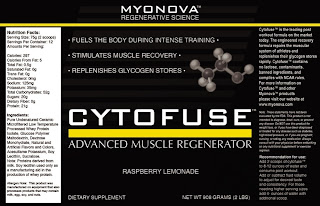
Cytofuse - A pioneer in post workout nutrition, Cytofuse transports the most advanced whey protein available. Formulated with all of the naturally-occurring growth factors and bioactive peptides, Cytofuse is a potent trigger to promote protein synthesis and glycogen replenishment. Some information on the company can be found HERE
After training your body presents these three factors:
1. Glycogen Stores are low
2. Protein Breakdown is increased
3. Muscle Protein Balance is negative
Glycogen is muscle energy. Low glycogen stores mean that there's less cellular energy for daily life and certainly less energy for subsequent workouts. In this situation, training and performance suffer.
Protein Breakdown indicates that body tissues (which are made of protein) are being degraded. Increases in protein breakdown can lead to losses of muscle mass.
Muscle Protein Balance is regulated by the balance between Protein Synthesis and Protein Breakdown in the following way:
Muscle Protein Balance = Protein Synthesis - Protein Breakdown
Failure to rapidly bring the body back into recovery mode (i.e., to increase glycogen stores, to increase protein synthesis, and to prevent protein breakdown), has severeal potential consequences:
1. Prolonged muscle soreness and fatigue.
2. Poor subsequent performances on the track, field, and/or in the gym.
3. Symptoms of and or full-flegged staleness and overtraining.
4. Minimal gains in muscle mass despite a well-designed training program.
5. Losses of muscle mass and a secondary lowering of metabolic rate can occur if volume and intensity get high enough
So what should I be consuming after a workout? A good starting point would be (depending on goals and type of training):
Consume one meal of 0.8g of carbohydrate and 0.4 g of protein / kg of body weight immediately after training. Another meal should be consumed either 60-90 minutes later or normal eating should be resumed eating every 2-3 hours depeding on the individuals goals.
These products below are quality supplements that will help solve this post training deficit. If you need more information or would like to place an order, contact me.
Cytofuse - A pioneer in post workout nutrition, Cytofuse transports the most advanced whey protein available. Formulated with all of the naturally-occurring growth factors and bioactive peptides, Cytofuse is a potent trigger to promote protein synthesis and glycogen replenishment. Some information on the company can be found HERE
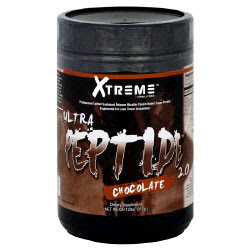
Ultra Peptide 1.0/2.0 - Strictly premium proteins such as pure undenatured low temperature processed micellar casein, cross flow microfiltered whey isolates, and hydrolyzed whey peptides. Also included are a small amount of "functional carbohydrates" which can help to assimilate the amino acids into the body in a great tasting form while maintaining low and stable blood sugar levels. Important to maximize lean tissue growth, strongly enhance your immune system, and dramatically speed up your recovery between workouts.
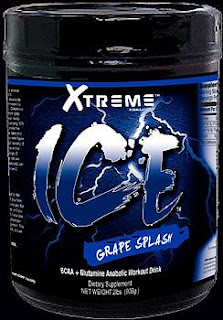
ICE - Branch Chain Amino Acids (BCAA's) actually have the capability to independently stimulate protein syntheses within the muscles and create an anabolic environment during intense training. They also can tremendously reduce the level of soreness in the days following your workouts therefore dramatically speeding your recovery, which of course is of the utmost importance to the drug-free athlete.
Subscribe to:
Posts (Atom)