There are many benefits of a warm up before physical activity. A few include faster contraction and relaxation of the agonist and antagonist, faster reaction time, improved strength and power, improved oxygen delivery and, most importantly, decreased injuries. A past and continuing trend to warm up is static stretching. Static stretching occurs when you hold a position that stretches a muscle for a given time (usually 15-90 seconds). Static stretching can be beneficial depending when it is used.
Static stretching develops something called a “specific joint relationship.” If the bones get drawn closer together than desirable, the impingement of connective tissue at the joint can cause numerous problems, especially nerve pinching. This can initiate a range of neural activity from muscle spasms to feelings that the muscle has been torn. By stretching and keeping the joints healthy, you can continue to train and perform without injury.
Through personal training, I see many things used incorrectly. Static stretching as a warm up is one of those things used incorrectly. In most cases, static stretching will make you weaker and decrease your performance if used before physical activity. This has been well documented in literature and numerous studies. Static stretching decreases motor neuron excitability, increases tendon slack, decreases stiffness, decrease formation of muscular adhesions, and alters actin-myosin position. At the ideal muscle length, the actin and myosin have the best capability to make contact and cause a muscular contraction. However, a fully elongated position doesn't allow the actin and myosin fibers to make enough contact to have a strong muscle contraction.
Static stretching should be used post workout and can help develop this “specific joint relationship.” Other benefits of using static stretching post workout are to improve imbalances between sides of the body, decrease injury, and improve length-tension relationship in muscles. These factors will lead to improved movement patterns and posture helping relieve low back and knee pain.
So what should be used as a warm up? Dynamic stretching is an ideal choice. Dynamic stretching occurs when you actively move a joint through its range of motion. An example would be high knees or carioca. The benefits of using dynamic movements as a warm up include mimicing movements that will be used, increasing body temperature, improving strength, and improving neuromuscular function while moving through an active range of motion.
Another great choice as a warm up is self-myofascial release using a foam roller. Self-myofascial intentions are similar to that of a massage by working on the tissue. Static stretching and dynamic work address the length of the tissues, and tissue work addresses the quality. Imagine a rubber band with a knot in it. It's not going to stretch the same as it would if there wasn't a knot, right? Now, get the knot out and watch how it lengthens easily. Your muscle-tendon units aren't much different. If there are balls of adhesions and scar tissue, they will never lengthen the way they should. Self-myofascial release through a process called autogenic inhibition causes relaxation, improves tone of the muscle, and breaks up these adhesions and scar tissue.
Self-myofascial release is a technique that has became popular in the training world due to its ability to improve tissue quality in a way traditional stretching cannot. Follow these simple but effective tips and reap the benefits of increased performance and decreased pain.
Showing posts with label warm up. Show all posts
Showing posts with label warm up. Show all posts
Friday, May 1, 2009


Thursday, January 22, 2009
Progress
Its been a while. But last week I did deadlift 405 lbs. for the first time in my life which is very exciting. I've been training for really about the last 6-7 years but I'm going to say only really training for about 8-9 months now. I've always loved to train and have really done it ever since I got started early in high school. I've learned more in the past 8-9 months as a trainer then I ever did in my previous training experiences. So really the first 5-6 years of my training almost made things worse for me as far as activation and technique goes.  Greatness
5. Kettlebell Work - No I'm not saying kettlebells are going or should replace a good ole' deadlift by any means but they have helped me in activating that backside also know as the glutes. Not to mention they can be just plain fun.
 Glute Activation = Good
I also have had shoulder and knee problems for the past 2-3 years and I've always thought it was because first off I was a collegiate baseball player and a catcher at that. Not to mention my pain was in my right shoulder and left knee, which thanks to reading on reading of Eric Cressey and Mike Robertson to name a couple have made me realize this is a very regular thing. Who would have very thought this pain could have diminished this much in the past couple months. Compensation patterns suck. I know baseball had was a factor but terrible programs design along with exercise technique did quite a bit to help in the pain I was having.
It's unbelievable how informed people are on things such as low back, knee, and shoulder pain. It was hard for me believe how far a these following things incorporated into a warm-up can do to improve pain:
1. Myofascial Release - A foam roller may be one of the best investments you can make.
It's unbelievable how informed people are on things such as low back, knee, and shoulder pain. It was hard for me believe how far a these following things incorporated into a warm-up can do to improve pain:
1. Myofascial Release - A foam roller may be one of the best investments you can make.
Greatness2. Activation Work - simply put you can complete a movement, but if you aren't stabilizing or activating the appropriate musculature you're more then likely going to run into problems down the road. Things from X-band walks, scapular push-ups, to glute bridges.

Scapular Wall Slides
4. Warm-up sets and reps - You need to get a "feel" of the movement on hand and who wants to throw 300 lbs on their back without a couple warm up sets?
5. Kettlebell Work - No I'm not saying kettlebells are going or should replace a good ole' deadlift by any means but they have helped me in activating that backside also know as the glutes. Not to mention they can be just plain fun.
Glute Activation = Good6. Footwear - or no footwear. Nike Free may be one of the greatest things invented or just plain barefoot has helped greatly in deadlift and squatting technique and "feel"

Great Choice
Terrible Choice

Great Choice
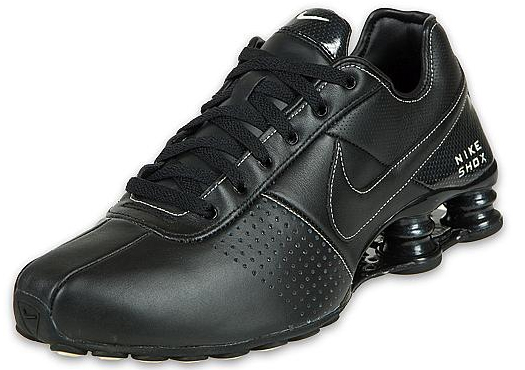
Terrible Choice
Well there it is a little list of things that have helped me greatly in my quest to pain free shoulders and knees. I have seen great improvements from just incorporating an extra 10-15 minutes into my training sessions.
Subscribe to:
Posts (Atom)