Thursday, March 19, 2009

Quick Information On Force Couples

I talk about anterior pelvic tilt quite a bit and I feel I've explained a dozen times this week why someone shouldn't be stretching their hamstrings in most situations. Here is a some geeky information on the force couples and what needs to be worked on if these force couples are out of balance. This may not make a whole lot of sense to everyone. The human body is an amazing thing. Each situation is different so this is kind of a starting point in most situations.


Anterior Force Couple

Anterior Force (Hip Flexors):
- Psoas
- Iliacus
- Rectus Femoris
- TFL

Posterior Force:
- Spinal erectors (pulling on back side of pelvis)

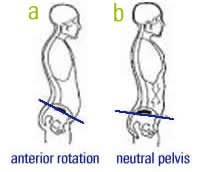
Anterior Pelvic Tilt (Lumbar Lordosis)

Muscles to strengthen:
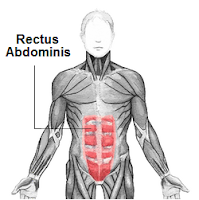
- Rectus Abdominus
- External Obliques
- Gluteals
- Hamstrings

Muscles to stretch:
- Psoas
- Illiacus
- Rectus Fremoris
- TFL
- Spinal Erectors

Posterior Force Couple

Posterior Force:
- Gluteals
- Hamstrings

Anterior Force:
- Rectus Abdominus
- External Obliques

Posterior Pelvic Tilt (Thoracic Kyphosis)

Muscles to Strengthen:
- Psoas
- Iliacus
- Rectus Femoris
- TFL
- Spinal Erectors

Muscles to Stretch:
- Rectus Abdominus
- External Obliques
- Gluteals
- Hamstrings

Monday, March 16, 2009

Seven More Keys To Success

1. Lift For Strength - I would say the best thing I did in the past 6 months was to start following a upper/lower split instead of following a "bodybuilding" routine. My outline looks like so:

Monday - Lower Body
Tuesday - Upper Body
Wednesday - Activation Work/Slow Steady Work/Off
Thursday - Lower Body
Friday - Upper Body
Saturday - Kettlebell/Body weight Work
Sunday - Off

To get strong you have to lift for strength. My maximum effort lifts now have a rep scheme of 6x4, 5x5 or 8x3 for most part, depending on the week. You would think putting this much stress on your body lifting up to 90% of your maximum would lead to injury. Keep good form and you'd be surprised what a difference you'd see if you traded that squat from 3x8 to 8x3. Let your nutrition influence your physique and your training influence your strength. After only 16 weeks of switching from a body part split to a lower/upper split I've noticed a huge difference not only my physique but also my strength.

You don't need to follow a "bodybuilders" routine to get big

2. Decreasing Aerobic Work - This was a hard one for me to give a try, let alone actually see it work. Doing less has helped me a great deal. Strength gains are hindered if aerobic work is to heavy. I realized I was putting a lot of effort into aerobic work when I could do something fun like finishing up a workout with pulling a sled or some kettlebell work in interval fashion for example. The thought of running on the treadmill four times a week makes me bored just thinking about it.

3. Adding A Lot Of Single Leg Work - Playing baseball for the past four years at the college level has put some nasty imbalances in my legs. I'm lucky because I throw right and swing left so that has helped keep imbalances from getting to bad but they are still there. My right hip is less mobile compared to my right. The left knee pain I was having I thought was because of catching in college. But when I started incorporating some heavy single leg work the pain started to diminish. I've covered this in a past post, but fix imbalances/mobility issues and most people depending on the situation will see a loss of pain.

4. Working On Weaknesses - I have always had terrible deadlift form. Not because I can't deadlift, mainly because I've never felt comfortable with my technique. After just 16 weeks I took what used to be a 385 lbs deadlift to a 435 lbs deadlift. Sure a lot is thanks to improving mobility in my hips and thoracic vertebrae but I don't know how I went through years of training without a deadlift.

I also had terrible internal rotation (GIRD) in my throwing arms shoulder. Adding both dynamic and static movements to target the posterior capsule helped a bunch. Not only has pain in my shoulder diminished but my lifts (pull-ups, push-ups, rows....) have improved greatly once full mobility was reached.
Loosen up that posterior capsule

5. Getting Away From Program Design When Needed - There are days when you get to the gym and you don't have it. A cookie cutter approach doesn't work. I don't go a week or mini cycle where I don't need some modification in what I planned on doing. No reason beating yourself into the ground on what may not feel good that day. An example would be a deadlift switched to a trap bar deadlift a day where your deadlift doesn't feel up to par.

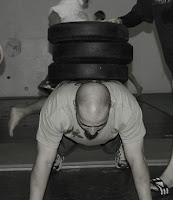
An somewhat extreme example of this is due to my shoulder I have dropped barbell benching for the past 16 weeks. Push-ups love me. Once I feel my external rotation strength and my internal rotation improves to where I want it I know I'll more then likely see a new personal record in my bench.


Another point that is somewhat along the same lines is it amazes me how in tune you get to your body. The days when I feel that left hip become a little more active than my right in a lift, I can tell. If I can't get that right glute/hip to "wake up" with some activation work it's time to modify and find a new exercise.

6. Incorporating A Deload Week - This the hardest thing I have ever done but plain and simple a deload is where volume is dropped so your body has a chance to recover from the previous 3 weeks. It's hard to stop when you know you have more in you after a lift but this little modification has helped. The intensity is still there but to a point. The weeks after a deload week my mind and body can tell a difference.

7. Nutrition Changes - I've put on 25-30 pounds in a little over 16 weeks. I was on a very low carbohydrate following for a long while and seen great results. When I tried to start putting weight on adding 100-200 grams of carbohydrates to my post workout meal/shake has make a big difference. I'm not as lean as I used to be (which was a hard thing to get over at first!) but I know if I started to cycle my carbohydrate intake a bit I would see a difference within a couple weeks. Again, I'm just amazed how in tune you get to your body not only on the training side but on the nutrition side also.

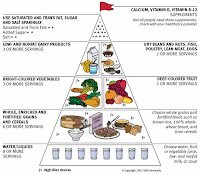
The pyramid sucks

Thursday, March 12, 2009

Regular Crunches

Some people know the importance of abdominal strength in helping to address someone in anterior pelvic tilt which in turn can lead to low back pain. But what some of these people don't understand is what a regular crunch can do to actually make their lower back hurt worse than it already does.

Regular crunches shorten the rectus abdominis. This may help with anterior pelvic tilt but in the end will depress the rib cage and pull people into a more kyphotic position at the thoracic vertebrae. This is not a good thing for upper back, neck, and shoulder health. This exaggerated kyphotic position at the mid back can lead exaggerated lordosis position at the lower back over time. Not to good on low back health.

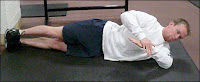
Whats a better alternative to crunches? There is a crunch called a reverse crunch which target the posterior fibers of the external obliques. This allows you to address anterior pelvic tilt without affecting the rib cage. My favorite alternative would have to be the roll out or the plank. There a numerous variations to a plank that include side planks, plank with a weight transfer, or my new favorite the two arm rotating to one arm plank. Throw those swiss ball crunches out of your arsenal. Teach your body stability not flexion and it will thank you greatly.

Thursday, March 5, 2009

West Liberty Index Article

First part of my article was published today. It can be found HERE

The second part (I wish they would have put that it was going to be a two part article!) should be in the paper in a couple weeks.

Writings not my thing but I have some good resources who can make some dull things sound a bit better than they might be.

Tuesday, March 3, 2009

Fish Oil

Most Americans don't get enough omega 3s into their diet. In fact most Americans ratio of omega 3s to omega 6s is 30:1 and the ratio should be around 2:1. This can have an effect on performance and body composition. But more importantly can increase disease rates!! A dietary shift toward omega 3s has been shown to help decrease disease rates. Omega 3s can help decrease nagging pain or "flare ups" from shoulder tendinitis for example. Plain and simple omega 6s are very pro-inflammatory where omega 3s provide a very weak inflammatory response.

Get Your Omega 3s

Some people also may feel they get enough omega 3 sources through dietary fish intake. Some may, but it greatly depends on your source. Most sources of fish through manufacturing end up losing a great deal of the omega 3s they may have started with. This is why I suggest people incorporate a fish oil supplement to their day to ensure adequate intake. Most do well with adding 900-1000 mg of omega 3 fatty acids. Eicosapentaenoic Acid (EPA) to Docosahexanoic Acid (DHA) should be in a ratio of 3:1.


Here are some other health benefits to adding omega 3s to ones diet (some mentioned above but looked at from a different perspective):

Increases Lean Body Mass: by increasing BMR (by up to 400 kcal/day) and improves the ratio of fat/carbohydrate oxidized (sparing carbohydrates, burning fat).

Less Pain and Inflammation: EPA, have a very positive effect on your inflammatory response. Through several mechanisms, they regulate your body's inflammation cycle, which prevents and relieves painful conditions like arthritis.

Cardiovascular Health: Work wonders for your heart and the miles and miles of arteries and veins that make up your cardiovascular system. They help to lower cholesterol, triglycerides, LDLs and blood pressure, while at the same time increasing good HDL cholesterol.


Protection from Stroke and Heart Attack: When plaque builds up on arterial walls and then breaks loose, it causes what's known as a thrombosis, which is a fancy way of saying clot. Omega 3 fatty acids break up clots before they can cause damage.

Better Brain Function and Higher Intelligence: Pregnant and nursing mothers can have a great impact on the intelligence and happiness of their babies. For adults, omega 3 improves memory, recall, reasoning and focus.

Less Depression and Psychosis: Omega 3 fish oil supplements "alleviate" the symptoms of depression, bipolar and psychosis.

Lower Incidence of Childhood Disorders: Children (and adults) with ADD and ADHD experience a greatly improved quality of life. And those with dyslexia, dyspraxia and compulsive disorders have gotten a new lease on life.

Reduction of Breast, Colon and Prostate Cancer: Shown to help prevent three of the most common forms of cancer – breast, colon and prostate. They stop the alteration from a normal healthy cell to a cancerous mass, inhibiting unwanted cellular growth and causing apoptosis, or cellular death, of cancer cells.
Tuesday, February 24, 2009

Random Tuesday

This whole blog thing is kind of addicting. Here's a couple random Tuesday thoughts:

1. So I was told the term "eat like a horse" doesn't make much sence. Horse's don't eat meat. I geuss I'm to use the term "eat like a lion". Hope your happy Adam.

2. Adam wrote a good series of articles on ACL injuries among other things. He's a former wrestler so I geuss it's only right for him to write about basketball players like he did.

3. I am excited/nervous about a new endefor I'm going to start. I am going to start writing a bi-weekly article for my newspaper back home. The newspaper is the West Liberty Index and the website can be found HERE. I've never thought of myself as a writer and after getting a Fitness and Human Performance Degree that last thing I thought I'd be doing is writing articles. But I geuss it's easy to write about something you're passionate about.

4. I never realized how much work goes into writing an article!!

Stationary Machines

A stationary machine is a machine that is one where your range of motion is set. Whether that be a Smith machine, Hammer strength machine, or your famous leg extension machine and all its evil friends such as hamstring curls or seated row. People like easy I guess. We will look at why they are a waste of time for the general population and just about everyone for that matter.

1. Range of Motion - How often do you perform a move where the range of motion is predetermined? Take picking up a bag of grocery's from the ground. You have to worry about keeping your balance in numerous planes of motion. In a Frontal, Sagittal, and Transverse plane. If you don't you'll likely end up falling over and loosing your balance. Now take a look at a squat using a Smith machine. You don't have to worry about keeping your balance in a Frontal or Transverse plane. Machines don't mimic everyday movements.


Along with this since your range of motion is predetermined, a lot more wear and tear can seen at a joint. It's like trying to fit the wrong key into a key hole. It just doesn't work all that well.

2. Stability - Machines are safer than free weights. I hear this all the time. But are they really? This goes along with number 1 but since your knee joint doesn't have to worry about adduction and abduction at that joint. This causes much less activity at that joint itself and almost lets that joint relax. Back to that example of picking up your grocery's. Without stabilization at that knee joint you are much more likely to become injured. There goes that saying about machines being safer than free weights.

3. Leg Extensions - Maybe the worse machine of them all. The starting point of a leg extension is at 90 degrees. When your knee is at this 90 degrees your four main protective knee ligaments (ACL, MCL, PCL, LCL) that keep your femur from displacing on your tibia are almost completely lax. Plain and simple these four ligaments can't do their job of stabilizing the knee joint. Not to good for that knee.


Ouch

4. Unilateral Movements - There are none. Well I guess you could use a leg extension with one leg but you're telling me you get more benefit from a one leg extension compared to a one leg squat or a good old lunge? Doubt it.

I've touched on this before but many people have tight hip flexors. We sit at desks all day and our hip flexors are in a shortened state. When one hip flexor ends up being less flexible than the other (which I see a lot of) this can lead to imbalances in legs. Whats the best way to address this? With unilateral movements.

5. Glute Activation - Ever wonder why a powerlifter has a huge backside? Because they perform movements such as deadlifts and squats. Your most powerful muscle should be your glutes and that's what is the main mover in a movement such as a deadlift or squat. The general population doesn't know how to activate their glutes. Without glute activiation problems such as knee and low back pain are more than likely going to happen in the future. You find a machine that will strengthen your backside as well as a good looking squat or deadlift and I'm all ears.


Wake Them Up People!!

There's a couple of a big things that need to be taken to mind before sitting down and performing a set of seated leg extensions. Or a leg press. If you like your health and the idea of performing movements that may benefit you while walking up a flight of stairs stick with anything but stationary machines. People like easy and easy isn't always better or safer.